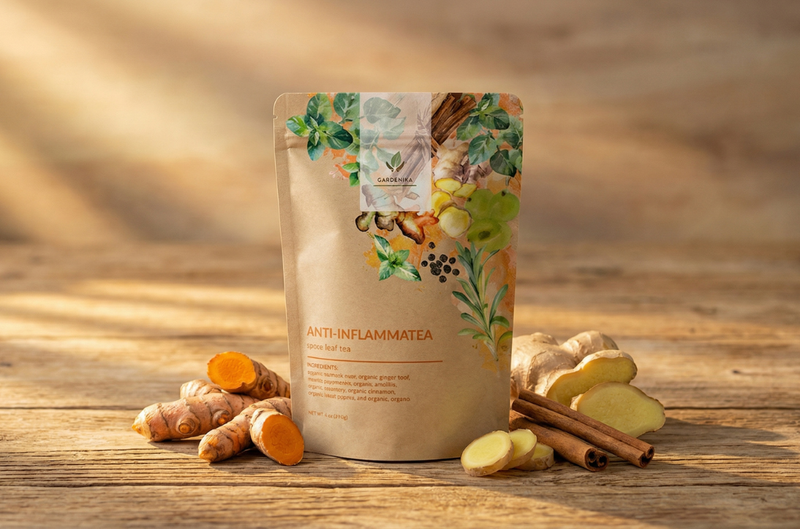
Anti-Inflammatory Tea: How Turmeric, Black Pepper & 6 More Herbs Support Your Body Naturally
Inflammation is something every one of us deals with — whether it shows up as joint stiffness after a long day, that low-grade puffiness that seems to linger, or a general sense of not feeling quite right. The good news is that nature packed some remarkably powerful tools into certain roots, herbs, and spices. And when you bring the right ones together in a single cup of tea, the results can be genuinely meaningful.
This guide breaks down exactly how anti-inflammatory tea works, why certain ingredient combinations matter more than others, and what makes an 8-herb Ayurvedic blend like ours different from a simple turmeric or ginger tea. No fluff — just the science and the story behind every ingredient.

What Is Inflammation — and Why Does It Matter?
Your body uses inflammation as a defense system. When you get a cut or catch a cold, your immune system sends white blood cells to the area, causing swelling, redness, and warmth. That's acute inflammation, and it's a good thing — it's how you heal.
The problem starts when inflammation becomes chronic. Instead of switching off after the threat is gone, your immune system stays in a low-level state of alert. Over time, chronic inflammation has been linked to a range of serious health concerns, including heart disease, arthritis, and metabolic disorders [1]. Managing it isn't about eliminating inflammation entirely — it's about keeping it in balance.
That's where anti-inflammatory foods and beverages come in. Certain plants contain compounds called polyphenols and flavonoids that help your body regulate its inflammatory response more effectively [2]. Tea made from these plants is one of the easiest and most enjoyable ways to incorporate them into your daily life.

The Science Behind Anti-Inflammatory Tea
Anti-inflammatory teas work at a cellular level. The key players are phytochemicals — natural compounds found in plants that interact with the same biological pathways your body uses to manage inflammation.
Two of the most well-studied categories are polyphenols and flavonoids. Research has shown these compounds can neutralize free radicals (unstable molecules that contribute to cellular damage and inflammation) and suppress the signaling pathways that trigger inflammatory responses in the body [3].
One important thing to understand: not all anti-inflammatory ingredients are created equal when it comes to absorption. Some compounds, like curcumin in turmeric, are poorly absorbed on their own. That's why what you pair them with matters just as much as what you include. More on that below.
8 Powerful Ingredients — and What Each One Does
Most anti-inflammatory teas on the market lean on one or two headline ingredients — usually turmeric or ginger. Our blend takes a different approach. Inspired by traditional Ayurvedic formulation, it combines eight organic herbs, each chosen for a specific role. Here's the breakdown.

Turmeric Root — The Golden Foundation
Turmeric is the anchor of any serious anti-inflammatory blend. Its active compound, curcumin, is one of the most extensively studied natural anti-inflammatories in the world. Research from Johns Hopkins Medicine highlights that curcumin can help manage inflammatory conditions including arthritis and joint discomfort [4].
The catch? Curcumin on its own is notoriously hard for your body to absorb. Up to 95% of it can pass through your system without being used — which is exactly why we include black pepper in this blend.
Black Pepper — The Absorption Booster
This is the ingredient that separates a good anti-inflammatory tea from a great one. Black pepper contains a compound called piperine, and when piperine and curcumin are consumed together, the bioavailability of curcumin increases by up to 2,000% [5].
That number isn't a marketing claim — it comes from peer-reviewed research and has been cited by Johns Hopkins Medicine and NutritionFacts.org alike. Even a small amount of black pepper is enough to make a significant difference. By including it directly in the blend, we've already done that work for you.
Ginger Root — The Warming Soother
Ginger has been used in traditional medicine for centuries, and modern research backs up why. It contains compounds called gingerols, which have demonstrated anti-inflammatory and antioxidant effects [6]. A study published in the journal Molecules found that ginger and turmeric together produce synergistic anti-inflammatory effects — meaning they work better as a pair than either does alone [7].
Beyond inflammation, ginger is a well-known digestive aid. It stimulates saliva and gastric enzymes, helping ease bloating and discomfort — a nice bonus in a daily wellness tea.
Peppermint — The Digestive Soother
Peppermint brings a cooling counterbalance to the warmth of turmeric and ginger. It's well recognized for its role in soothing digestive inflammation and easing irritable bowel symptoms [8]. In an anti-inflammatory blend, it serves double duty: it helps calm the gut while also making the tea more enjoyable to drink every single day — because consistency matters more than perfection.
Amalaki — The Ayurvedic Secret Weapon
Amalaki, also known as Indian gooseberry or amla, is one of the most revered herbs in Ayurvedic medicine. It's considered a rasayana — a rejuvenating herb — and for good reason. Amalaki is one of the richest natural sources of vitamin C, and it contains powerful antioxidants including gallic acid and ellagic acid [9].
Research has shown that amalaki possesses anti-inflammatory, antioxidant, and immune-supporting properties. It's also a traditional digestive tonic, helping to support healthy gut function and nutrient absorption [10]. In Western tea blends, you almost never see it — which is one of the reasons this ingredient gives our formula its edge.
Rosemary — The Rosmarinic Acid Hero
Rosemary isn't just a cooking herb. It contains a compound called rosmarinic acid, which has been studied for its anti-inflammatory and antioxidant properties [11]. Rosmarinic acid works by scavenging free radicals and reducing oxidative stress — two of the core mechanisms behind chronic inflammation.
It's a quieter ingredient in the blend, but it's doing meaningful work in the background.
Cinnamon — The Blood Sugar Balancer
Cinnamon adds warmth and sweetness to the cup, but it's not just there for flavor. Research supports cinnamon's role in helping regulate blood sugar levels, and it also contains anti-inflammatory compounds of its own [12]. Keeping blood sugar stable is actually an underappreciated factor in managing systemic inflammation — spikes and crashes can trigger inflammatory responses in the body.
Oregano — The Hidden Anti-Inflammatory
Oregano is the least expected ingredient on this list, and that's exactly the point. It's rich in a compound called carvacrol, which has shown anti-inflammatory activity in multiple studies [13]. Oregano also contains rosmarinic acid (the same compound found in rosemary), adding another layer of antioxidant support to the blend.
Why an 8-Herb Blend Matters More Than a Single Ingredient
You could buy a turmeric tea, a ginger tea, and a peppermint tea separately and drink all three. But that's not how traditional Ayurvedic formulation works — and it's not how the body works, either.
Anti-inflammatory compounds don't operate in isolation. Turmeric needs black pepper to be absorbed. Ginger amplifies turmeric's effects. Amalaki supports immune function while rosemary and oregano add antioxidant layers that turmeric and ginger can't cover on their own. Peppermint calms the gut so the rest of the blend can do its job. Cinnamon steadies blood sugar so inflammation isn't being fed from another angle.
Each ingredient has a role. Together, they create something greater than the sum of their parts — which is the core philosophy behind Ayurvedic blending.

How to Brew the Perfect Cup
Getting the most out of this tea is simple. A few guidelines to keep in mind:
Water temperature: Use water that's just off the boil — around 200°F (93°C). Boiling water can make turmeric and ginger taste bitter and harsh.
Steeping time: 5–7 minutes is the sweet spot. Long enough to extract the anti-inflammatory compounds and full flavor, short enough to keep the taste smooth and balanced.
Amount: Use about 1 teaspoon of loose leaf tea per 8 oz of water. If you like a stronger, more warming cup, go with 1.5 teaspoons.
When to drink it: This blend is caffeine-free, so there's no wrong time. Many people enjoy it in the morning as a gentle start to the day, or in the evening as a warming wind-down ritual. The key is making it a consistent part of your routine — the benefits of anti-inflammatory herbs build over time with regular use.
Frequently Asked Questions
How often should I drink anti-inflammatory tea?
Daily is ideal. The anti-inflammatory compounds in herbs like turmeric, ginger, and amalaki work best when consumed consistently over time. 1–2 cups per day is a great starting point for most people. As always, check with your healthcare provider if you have a specific health condition.
Can I drink this tea if I take medication?
Some herbs can interact with certain medications. Turmeric in particular may interact with blood thinners and anti-inflammatory drugs at high doses [14]. If you're on prescription medication, it's a good idea to talk to your doctor before adding any herbal tea to your routine — especially one you plan to drink daily.
Is this tea safe for everyone?
Our Anti-Inflammatory Tea is USDA Organic, Kosher Certified, gluten-free, and caffeine-free. It's made from whole herbs with no artificial flavors or sweeteners. That said, if you have known allergies to any of the ingredients — particularly turmeric or ginger — start with a small amount and see how your body responds.
Does anti-inflammatory tea actually work?
The short answer is yes — with realistic expectations. Herbal teas aren't a replacement for medical treatment, but the compounds in turmeric, ginger, black pepper, and the other herbs in this blend are backed by real research. The key is consistency. Drinking one cup occasionally won't have much effect. Making it a daily habit is where the real benefits show up.
Where can I try Gardenika's Anti-Inflammatory Tea?
Our Anti-Inflammatory Tea is available as a loose leaf blend — 4 oz bags that make 40–50 cups. It's USDA Organic, Kosher Certified, and lab tested. Shop it here.
References
[1] Pahwa R, Goyal A, Jialal I. Chronic Inflammation. StatPearls Publishing; 2024. https://www.ncbi.nlm.nih.gov/books/NBK493239/
[2] Ohishi T, Goto S, Monira P, Isemura M, Nakamura Y. Anti-inflammatory Action of Green Tea. Anti-Inflammatory & Anti-Allergy Agents in Medicinal Chemistry. 2016;15(2):85–93.
[3] Chatterjee P, Chandra S, Dey P, Bhattacharya S. Evaluation of anti-inflammatory effects of green tea and black tea: A comparative in vitro study. J Adv Pharm Technol Res. 2012;13(2):66–71.
[4] Johns Hopkins Medicine. Turmeric Benefits. https://www.hopkinsmedicine.org/health/wellness-and-prevention/turmeric-benefits
[5] Anand P, Kunnumakkara AB, Newman A, Aggarwal BB. Molecular Bioavailability of Curcumin: Problems and Promises. Molecular Pharmaceutics. 2007;4(5):807–818.
[6] Mashhadi NS, Ghiasvand R, Askari G. Anti-oxidative and anti-inflammatory effects of ginger in chronic diseases. Int J Prev Med. 2013;4(Suppl 5):S36–S42.
[7] Zhou X, Afzal S, Wohlmuth H, Munch G, Leach D. Synergistic Anti-Inflammatory Activity of Ginger and Turmeric Extracts. Molecules. 2022;27(19):6271.
[8] Srivastava JK, Shankar E, Gupta S. Chamomile: A herbal medicine of the past with bright future. Mol Med Rep. 2010;3(6):895–901.
[9] Anand M, Javiya S. Phytochemistry and pharmacological activity of Emblica officinalis. Agroforestry Systems. 2016.
[10] Jamshidi N, Cohen MM. The Clinical Efficacy and Safety of Tulsi (Ocimum sanctum L.) in Humans: A Systematic Review of the Literature. Evidence-Based Complementary and Alternative Medicine. 2016;2016:7805769.
[11] Barclay LR, Kcellular C, Stasik I. Antioxidant and Anti-inflammatory Activity of Rosmarinic Acid. Free Radical Biology and Medicine. 2004.
[12] Khan A, Khatib R, Anderson RA. Cinnamon inhibits insulin and lipid accumulation in HepG2 cells. Biochem Biophys Res Commun. 2007;331(3):1033–1038.
[13] Javadi Y, Emamifar A, Namnabat M. Anti-inflammatory and antioxidant properties of essential oils: A mini review. Food Biosci. 2015;5:36–43.
[14] Blumenthal M, Busick WR, Goldman CB. Herbal Medicine: Expanded Commission E Monographs. American Health Holdings; 2000.
Â