
The Complete Guide to Loose Leaf Tea

Summary: Loose leaf tea is a simple way to explore whole leaves, herbs, flowers, roots, and spices in a more tactile brewing ritual. This guide introduces the main tea types, explains the difference between true tea and herbal infusions, and shares approachable methods for brewing and storing a flavorful cup.
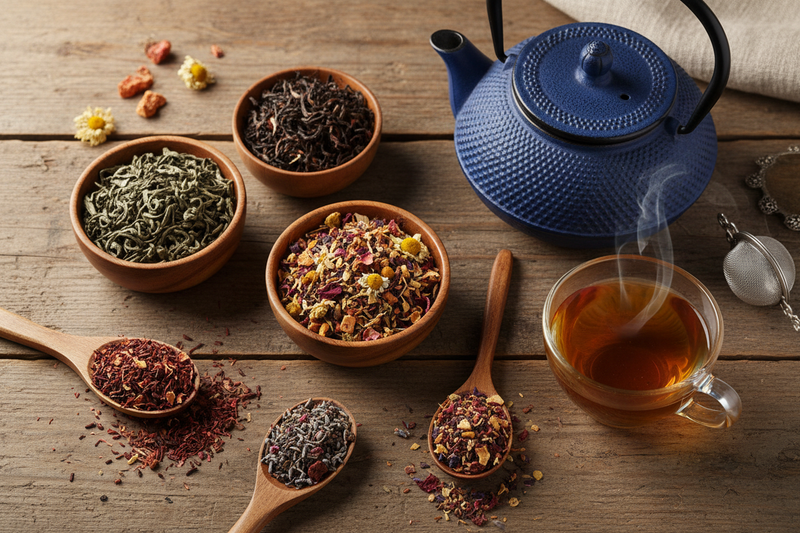
Table of Contents
- What is loose leaf tea?
- Why choose loose leaf?
- The main tea types
- How to brew a great cup
- Useful brewing tools
- How to store loose leaf tea
- Frequently asked questions
What Is Loose Leaf Tea?
Loose leaf tea is brewed from leaves, herbs, flowers, roots, fruit, or spices that are not enclosed in a single-use tea bag. The ingredients have room to expand in hot water, which lets their aroma, color, and texture emerge gradually. It is a traditional format that makes preparation feel more hands-on, from measuring the tea to watching it unfurl.
True teas—black, green, white, oolong, and pu-erh—come from the Camellia sinensis plant. Herbal teas, also called tisanes, are infusions made from other botanicals. Both offer a wide range of flavor experiences, from brisk and malty to floral, minty, citrusy, earthy, and warmly spiced.
Why Choose Loose Leaf?
Loose leaf tea makes it easy to see and appreciate the ingredients in your cup. A larger-leaf black tea can bring a full, rounded aroma; a botanical blend may show petals, mint, citrus peel, or spice pieces before brewing. This visual element adds interest to everyday preparation.
It also gives you more control. You can change the amount of tea, water temperature, and steeping time to match your taste. Many quality loose leaf teas can be re-steeped, with later infusions showing different notes. A simple basket infuser is enough to get started.
Browse Gardenika’s organic loose leaf tea collection to compare black, green, herbal, and specialty blends.
The Main Tea Types
Black Tea
Black tea is fully oxidized, giving it a deep color and flavors that can range from malty and brisk to floral and citrusy. It pairs well with milk, lemon, or a pastry.
Green Tea
Green tea is processed to retain a fresh, vegetal character. Cooler water and a shorter steep help keep the cup smooth and bright.
White Tea
White tea is often delicate and lightly aromatic, with soft floral or honey-like notes. It is best brewed gently with cooler water.
Oolong and Pu-erh Tea
Oolong can range from floral and creamy to toasted and deep, while pu-erh is known for an earthy, fermented character. Both reward attentive steeping and are enjoyable across multiple infusions.
Herbal Infusions
Herbal infusions can be built from ingredients such as chamomile, rooibos, peppermint, ginger, turmeric, hibiscus, and lemongrass. They are naturally caffeine-free when they do not include true tea leaves.
How to Brew a Great Cup
Begin with one to two teaspoons of loose leaf tea per eight ounces of water. Use freshly boiled water for black and most herbal teas. For green and white tea, use water that has cooled slightly below a boil. Start with three to five minutes for black tea, one to three minutes for green tea, two to four minutes for white tea, and five to eight minutes for herbal blends.
Taste, then adjust. If a tea feels too strong, use a shorter steep next time. If you would like more body, add a little more tea or steep slightly longer. Small changes are part of discovering your preferred cup.
Useful Brewing Tools
A mug with a removable basket infuser is an easy everyday option. A teapot with a built-in strainer works well for sharing, while a small scale or measuring spoon can help create consistency. A timer and thermometer are helpful but optional; they simply make it easier to repeat a preparation you enjoy.
How to Store Loose Leaf Tea
Store loose leaf tea in a sealed, opaque container or its resealable pouch. Keep it in a cool, dry, dark cupboard away from heat, moisture, and strongly scented foods. This protects the tea’s aroma and flavor from one cup to the next.
Frequently Asked Questions
How much loose leaf tea should I use per cup?
One to two teaspoons per eight ounces of water is a useful starting point for most teas.
Can loose leaf tea be steeped more than once?
Many quality loose leaf teas can be re-steeped. Later cups may show a lighter or different flavor profile.
Do I need a special teapot?
No. A mug and basket infuser, a tea ball, or a simple strainer are enough to brew loose leaf tea.
What is the best way to keep loose leaf tea fresh?
Keep it tightly sealed in a cool, dry, dark place away from moisture and strong aromas.
Previous article


